
Knowing its origin, characteristics and behavior allows us to understand why the choice of the transplant container is one of the fundamental decisions when establishing a plantation.
A key decision from the start
Establishing a pistachio plantation requires planning and a long-term vision. The choice of land, the variety, the irrigation system, and agronomic management are aspects that influence the development of the crop.
Within this planning, the transplanting pot plays a particularly important role. It forms the base of the tree and can influence its vigor, adaptability to certain soil conditions, and behavior in the face of various agronomic factors.
Among the grafting tools used in pistachio cultivation, UCB1 stands out for its characteristics and the interest it has aroused in research and in the production sector.
What is UCB1?
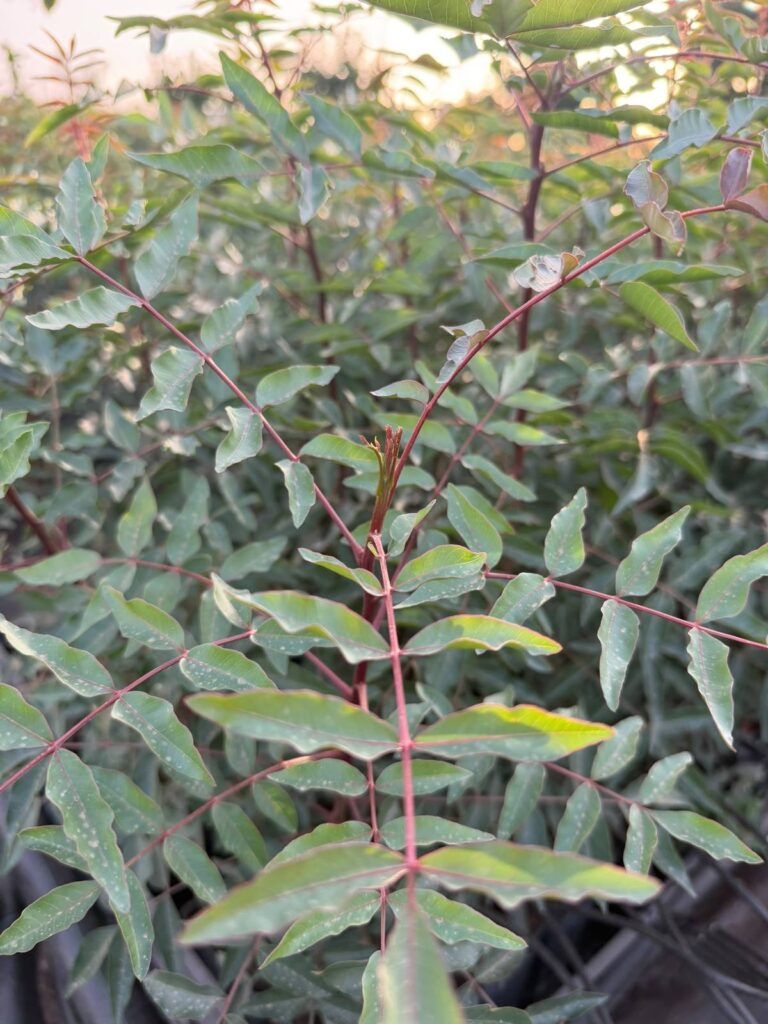
UCB1 is a hybrid pistachio graft from the cross between Pistacia atlantica (female parent) and Pistacia integerrima (male parent). Its development is linked to research at the University of California. It was selected for agronomic characteristics of interest, including vigor and resistance to verticilosis, although behavior may vary depending on the material and growing conditions.
Why has UCB1 attracted so much interest?
Interest in UCB1 is related to a combination of agronomic characteristics. It is important to interpret them within the specific conditions of each plantation and not as guarantees of yield.
Strength and development
UCB1 has been associated with considerable vigor, a quality that has contributed to its popularity among producers and industry professionals. The development of the tree is also conditioned by the soil, water availability, nutrition, and the agronomic practices applied.
Resistance to verticilosis
Resistance or tolerance to verticilosis (Verticillium dahliae) has been one of the characteristics considered in the selection and use of UCB1. The choice of plant material with resistance characteristics can be part of a preventive strategy, but it does not replace field analysis, sanitary practices, or agronomic management.
Behavior in the face of salinity
UCB1 has also been studied for its response to salinity conditions. The response depends on factors such as the intensity of the salinity, the characteristics of the soil, the water quality, and the specific plant material. Therefore, the conditions of each project must be evaluated before choosing the transplant medium.
Genetics matters. So does the production process.
Although the genetics of the transplant host are a relevant factor, the quality of the plant material is also related to its origin, selection, health, and production conditions. At Pistachos del Valle, these aspects are part of our daily work with UCB1.
How we produce our UCB1 plants at Pistachos del Valle
Vegetable material and hygiene
We work with virus-free plant material subject to the corresponding controls and verifications. Ensuring health from the very beginning is an essential part of our production process.
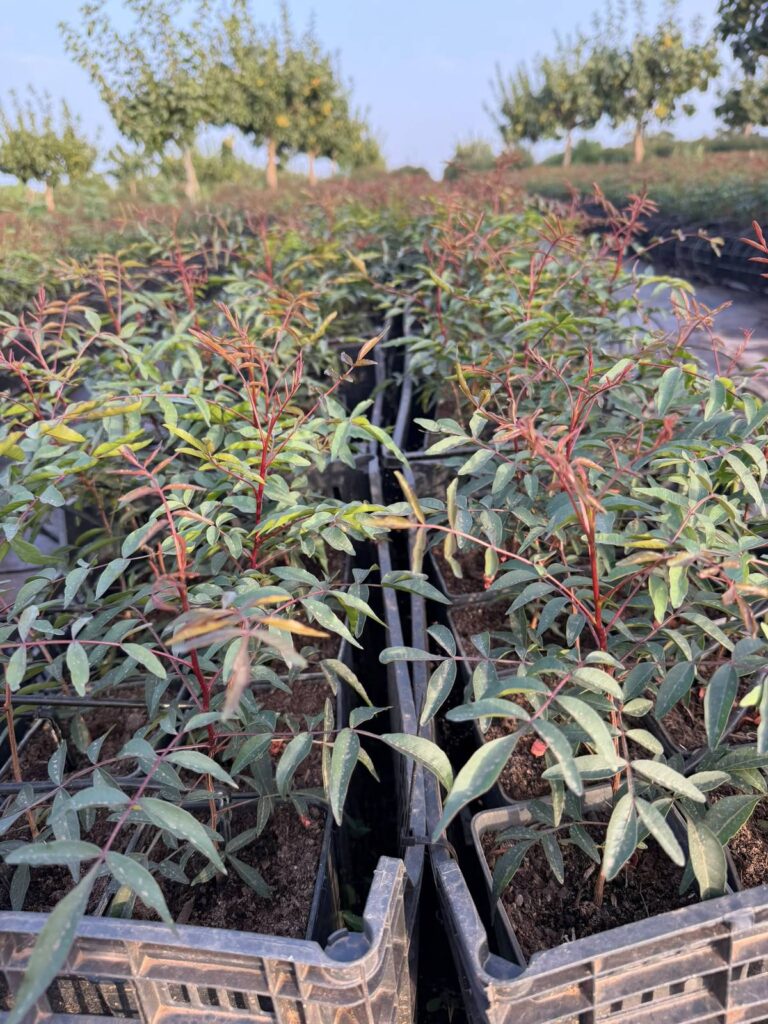
Production in peat
Our plants grow in peat. We choose this production system and do not use sand as a substrate, ensuring that the conditions in which each plant grows are optimal.
Individual selection
We select the plants one by one, paying attention to their quality and development. This individual selection is part of our commitment to the plant material we offer.
Outdoor acclimatization in Castilla-La Mancha
The plants are grown and acclimatized outdoors, in the climatic conditions of Castilla-La Mancha. We do not resort to forced growth in a greenhouse: we seek a development that favors the hardening and adaptation of the plant to the external conditions of the region.
Ready for the next stage
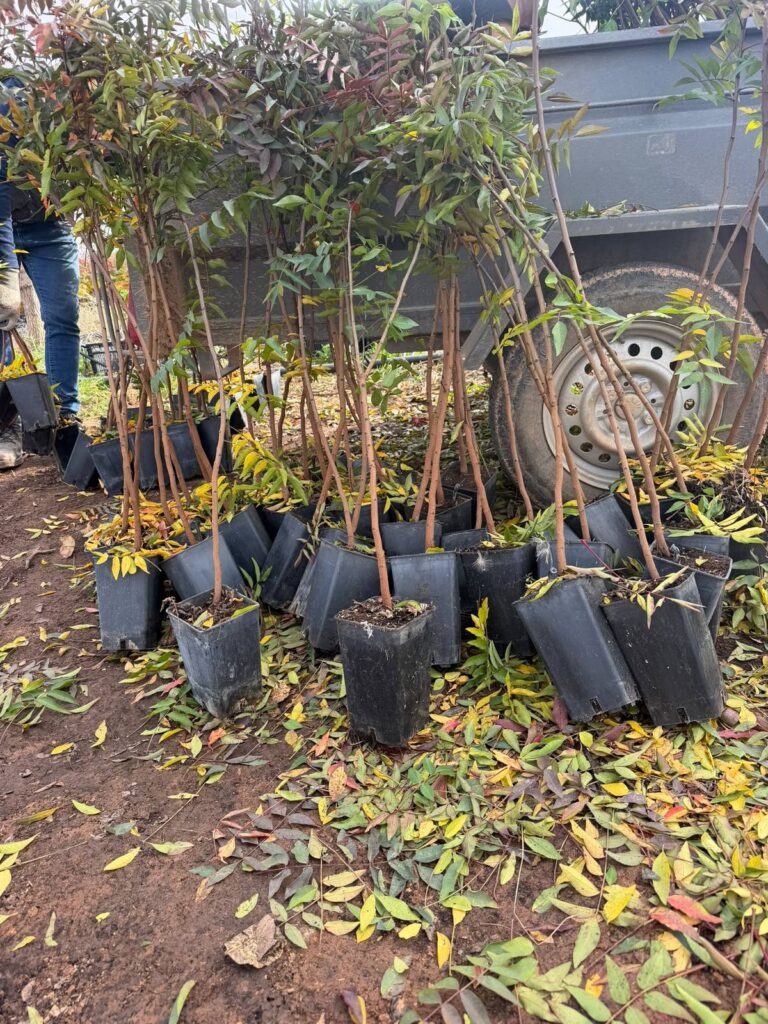
Our process is aimed at obtaining acclimatized and hardened plants, ready for grafting during the first summer, according to the conditions and development of each plant.
Production in peat, individual selection and outdoor acclimatization: these are some of the criteria that define our way of working at Pistachos del Valle and that we put into practice from the nursery.
What factors should be considered before choosing UCB1?
The choice of a transplant planter must be made taking into account the specific conditions of each plantation.
| Factor | Importance |
|---|---|
| Type of floor | The physical and chemical characteristics of the soil condition the root development. |
| Availability of water | It influences the planning and management of the crop. |
| Salinity | It should be evaluated both on land and in irrigation water. |
| Climate | Environmental conditions influence the development and behavior of the tree. |
| Agro-technical management | Nutrition, irrigation and other practices are fundamental for the development of the plantation. |
There is no universal choice that guarantees the same results in all areas. Analyzing the conditions of each project is essential to make informed decisions.
From the nursery to the field: every decision counts
A pistachio plantation is a project that requires planning, knowledge, and a long-term perspective. The choice of the planting material is one of the first steps, but its potential must be understood within a set of factors that include the quality of the plant material, the soil conditions, and agronomic management.
Knowing the characteristics of UCB1 allows for more informed decisions from the outset and for the establishment of a plantation with a holistic vision.
Are you planning a pistachio plantation for 2027?
At Pistachos del Valle we know that every project begins with important decisions. Knowing the plant material, its characteristics and its production process is a fundamental part of the planning of a plantation.
You can already reserve your UCB1 plants for 2027. It anticipates the planning of your project and Contact us to check the availability of plants and receive more information.
Get to know our implant carriers and discover how we can support you in your project.